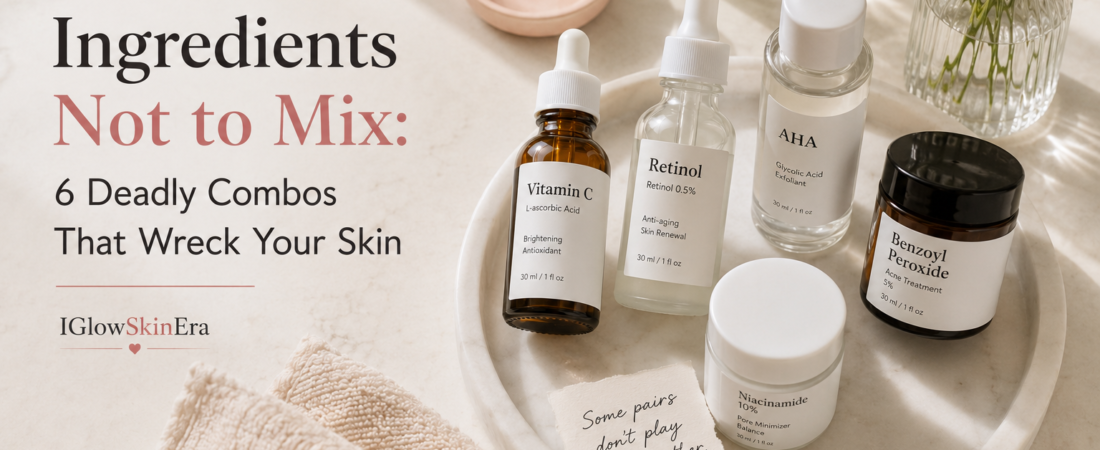
Knowing which skincare ingredients not to mix could be the single most important thing you learn for your skin this year.
Because here’s the hard truth nobody mentions when you’re starting out: you can buy all the right products and still be destroying your skin — just by using them together wrong. That’s not a skin problem. That’s a layering mistake. And it’s completely fixable.
If your skin has been getting worse despite doing “everything right,” this guide is for you. We’re breaking down every major pair of skincare ingredients not to mix, why these combos are dangerous, and exactly what to use instead – so your routine actually delivers the results you’re after.
📌 Save this post before you scroll. You’ll want to come back to it every time you add a new product to your routine.
Why Skincare Ingredients Not to Mix Actually Matters
Most beginners think more products = better skin. But your skin isn’t a mixing bowl – active ingredients have specific pH levels, absorption rates, and mechanisms that can seriously clash when combined.
When you layer the wrong skincare ingredients not to mix, here’s what actually happens beneath the surface:
- Irritation and redness that you’ll mistake for a breakout or allergy
- A compromised skin barrier that leaves your skin reactive and sensitive to everything
- Neutralised actives – you paid for a product that’s now doing absolutely nothing
- Over-exfoliation without realising it, causing dull, flaky, peeling skin
The good news? Once you know which combos to avoid, fixing your routine takes about five minutes.
Related: The Correct Skincare Routine Order for Beginners (AM + PM) – the complete step-by-step guide to layering everything in the right order.
The 6 Skincare Ingredients Not to Mix (Ever)
These are the most common – and most skin-damaging – combos beginners unknowingly use together. Go through this list and check your current routine.
❌ 1. Vitamin C + AHA/BHA Acids
This is the number one skincare layering mistake beginners make, and it quietly wrecks skin barriers every single day.
Vitamin C in its active L-ascorbic acid form is already a highly acidic ingredient – it works best at a low pH around 2.5–3.5. When you layer it directly with exfoliating acids like glycolic acid (AHA) or salicylic acid (BHA), you’re doubling down on acid load. Your skin can’t process that without fighting back.
The result is immediate irritation, prolonged redness, and a weakened skin barrier that takes weeks to repair.
What to do instead:
Split them by time of day. Vitamin C belongs in your morning routine where it also boosts your SPF protection. Save all your acids – glycolic, salicylic, lactic – for the evening.
☀️ Morning: Vitamin C serum → moisturiser → SPF
🌙 Evening: Exfoliating acid → moisturiser
[Skincare ingredients not to mix – Vitamin C and AHA BHA acids diagram](alt: skincare ingredients not to mix vitamin c and acids)
❌ 2. Retinol + AHA/BHA Acids
This is the combo that sends most beginner skin into full breakdown mode.
Retinol is one of the most powerful skincare ingredients available without a prescription. It accelerates cell turnover, smooths texture, and treats acne – but it makes your skin significantly more sensitive in the process. Layering an exfoliating acid on top of retinol is like adding fire to gasoline. You’ll get peeling, irritation, a damaged barrier, and weeks of painful recovery.
This is one of the most serious skincare layering mistakes you can make.
What to do instead:
Keep them on separate nights permanently. Think “retinol nights” vs “acid nights.” They do not share the same session – ever.
🌙 Retinol night: Cleanser → retinol → moisturiser only
🌙 Acid night: Cleanser → exfoliating acid → moisturiser only
❌ 3. Two Exfoliating Acids at Once
More acid does not equal faster results. This is one of the most damaging skincare layering mistakes beginners make – and one of the hardest to recognise, because the damage builds slowly.
Using a glycolic acid toner + a salicylic acid serum + a BHA cleanser in the same routine adds up to extreme over-exfoliation. Your barrier breaks down, your skin becomes inflamed, and suddenly your “acne routine” is causing more acne.
What to do instead:
Pick one exfoliant per routine. Alternate them across different evenings if you want both AHA and BHA benefits.
Recommended products:
- Paula’s Choice 2% BHA Liquid Exfoliant – the gold standard for unclogging pores and clearing blackheads. Ideal for oily, acne-prone skin. Use 2–3 nights a week only.
- The Ordinary Glycolic Acid 7% Toning Solution – excellent for smoothing texture and evening tone. Rotate with your BHA, never use both the same night.
❌ 4. Retinol + Vitamin C
Both of these are star ingredients that need to be the headline act of your routine – not used in a supporting role alongside each other.
They work at different pH levels, they both sensitise the skin when combined, and they actually cancel out each other’s effectiveness when layered together. This is one of the most common skincare ingredients not to mix situations that people don’t even realise they’re falling into.
What to do instead:
This one has the simplest fix: Vitamin C is a morning ingredient. Retinol is a night ingredient. Done. They’ll never meet on your face, and they’ll perform perfectly on their own.
❌ 5. Niacinamide + Vitamin C (The Myth That Has Some Truth)
This one is nuanced – and the internet has a lot of conflicting information about it.
The original concern was that niacinamide and vitamin C react to form niacin, a compound that causes flushing and yellowing of the skin. More recent formulation research suggests this reaction requires conditions (high heat, extreme concentrations) that don’t occur in typical skincare products.
So can you use them together?
For most people with normal to combination skin, yes – modern formulations are stable enough. In fact, niacinamide’s anti-inflammatory properties can actually help offset some of the irritation that vitamin C causes.
But — if you have sensitive skin or are using high-strength versions of both, separate them. Vitamin C in the morning, niacinamide in the evening. Better safe than dealing with unexpected redness.
Affordable pick: The Ordinary Niacinamide 10% + Zinc 1% – a skincare staple that works beautifully on its own in an evening routine, especially for oily and acne-prone skin.
❌ 6. Physical Scrubs + Chemical Exfoliants
This is the double-exfoliation trap – and it’s far more common than you’d think.
If you’re already using a BHA serum or glycolic acid toner, adding a physical scrub to the same session is brutal overkill. The chemical exfoliant is already dissolving dead skin cells at a molecular level. Your scrub is then physically abrading freshly exfoliated, raw skin. The result is a stripped, inflamed, seriously angry barrier.
What to do instead:
Choose one exfoliation method and commit to it. Chemical exfoliation (AHA/BHA) is generally more effective and gentler long-term than physical scrubs. If you love the texture of a scrub, limit it to once a week – and never on the same day as any chemical exfoliant.
Skincare Ingredient Combos That Actually Work Beautifully
Understanding skincare ingredients not to mix is only half the picture. Here’s what to pair together for genuinely great results:
✅ Niacinamide + Hyaluronic Acid
One of the safest and most effective combos in beginner skincare. Niacinamide reduces pores and calms redness while hyaluronic acid floods the skin with hydration. No irritation risk, works for every skin type.
Shop it: The Ordinary Hyaluronic Acid 2% + B5 – deeply hydrating, affordable, and layers perfectly under any niacinamide serum.
✅ Vitamin C + SPF
Vitamin C in the morning followed by SPF is one of the most powerful brightening + protection duos in skincare. Vitamin C actually increases the effectiveness of your sunscreen’s antioxidant defence. This is the morning pairing your skin has been waiting for.
✅ Retinol + Moisturiser (The Sandwich Method)
Apply a layer of moisturiser first, then retinol, then moisturiser again on top. This “sandwich” method buffers retinol’s intensity while still letting it work – the best approach for anyone just starting out with retinol.
✅ BHA/AHA + Hyaluronic Acid (After, Not During)
Wait 20–30 minutes after applying your exfoliating acid, then layer hyaluronic acid. It replenishes moisture that acids can draw out, leaving skin smooth and plump instead of tight and dry.
The Beginner-Safe Routine That Avoids Every Layering Mistake
Here’s a simple, proven routine built around everything you just learned – no mixing mistakes, no confusion:
☀️ Morning Routine:
- Gentle cleanser (CeraVe Hydrating Cleanser or Cetaphil)
- Vitamin C serum (TruSkin Vitamin C Serum – affordable and effective)
- Niacinamide serum – optional, wait 60 seconds after vitamin C
- CeraVe Moisturising Cream
- SPF 30+ – always the last step, never skipped
🌙 Evening Routine:
- Gentle cleanser
- Exfoliant – Paula’s Choice 2% BHA or The Ordinary Glycolic Acid 7% (not both, 2–3x per week only)
- The Ordinary Hyaluronic Acid 2% + B5 (on non-exfoliant nights, or 30 min after acid)
- CeraVe Moisturising Cream
- Retinol – only on nights you’ve skipped the exfoliant
Related: How to Build the Perfect Skincare Routine for Your Skin Type (Beginner-Friendly Guide) — find out which actives are actually right for you before adding them to your routine.
Recommended Products (All Beginner-Safe + Affordable)
| Product | What It Does | Best For |
|---|---|---|
| The Ordinary Glycolic Acid 7% | Smooths texture, brightens skin | Dull, uneven skin |
| Paula’s Choice 2% BHA | Unclogs pores, reduces blackheads | Oily, acne-prone skin |
| The Ordinary Hyaluronic Acid 2% + B5 | Deep hydration, plumps skin | All skin types |
| The Ordinary Niacinamide 10% + Zinc 1% | Shrinks pores, reduces redness | Oily, combination, acne |
| CeraVe Moisturising Cream | Repairs and protects skin barrier | Dry, sensitive, all types |
| TruSkin Vitamin C Serum | Brightens + antioxidant protection | Dull, uneven skin tone |
5 Rules to Always Remember About Skincare Ingredients Not to Mix
Bookmark this section:
- Vitamin C = mornings only. Acids and retinol stay at night.
- One exfoliant per routine, maximum. More is always less.
- Retinol nights = zero acids. No exceptions, ever.
- When in doubt, buffer with moisturiser between strong actives.
- Add one new active at a time – so you always know what caused a reaction.
FAQs: Skincare Layering Mistakes Answered
Q: What are the most important skincare ingredients not to mix for beginners?
The three most critical combos to avoid are: Vitamin C + AHA/BHA acids, Retinol + AHA/BHA acids, and using two exfoliating acids in the same routine. These are the most common causes of beginner skin damage and are completely avoidable once you know the rules.
Q: Can I use niacinamide and glycolic acid together?
Not at the same time. Niacinamide works at a higher pH than glycolic acid – mixing them reduces both ingredients’ effectiveness and can cause mild irritation. Use glycolic acid in the evening, niacinamide in the morning or on separate evenings.
Q: Is vitamin C and hyaluronic acid safe to use together?
Yes – this is actually one of the best beginner combos. Apply vitamin C first, let it absorb for 60–90 seconds, then layer hyaluronic acid on top. The HA seals in hydration without interfering with the vitamin C at all.
Q: Can I use retinol every night as a beginner?
No. Start with once or twice a week and increase slowly over 4–6 weeks. Using retinol every night as a beginner is one of the most common causes of severe irritation, barrier damage, and people giving up on retinol entirely.
My skin is tingling after mixing two products. Is that okay?
Tingling from a single well-formulated exfoliant is normal. But tingling from combining products is a warning sign. Rinse off, apply CeraVe Moisturising Cream, and go back to basics for a few days. Then identify the combo and avoid it.
Q: Can I use salicylic acid and niacinamide together?
Yes – actually one of the best combos for acne-prone skin. Salicylic acid clears the pore, niacinamide calms the inflammation around it. Apply salicylic acid first, let it absorb fully, then follow with niacinamide.
Q: What if I’ve already been making these mixing mistakes?
Strip your routine back for 1–2 weeks: gentle cleanser + CeraVe Moisturising Cream + SPF only. Let your barrier recover fully. Then reintroduce actives one at a time, starting with the mildest first.
The Bottom Line on Skincare Ingredients Not to Mix
Now you know exactly which skincare ingredients not to mix – and more importantly, why these combos cause real damage. The most common skin problems beginners blame on “bad skin” are often just layering mistakes. And layering mistakes are completely fixable.
Keep it simple. Layer smart. And when you add something new to your routine, come back to this guide first.
Read next: The Correct Skincare Routine Order for Beginners
Which mixing mistake have you been making? Drop it in the comments – you’re not alone.
📌 Pin this to your skincare board so you never mix the wrong ingredients again.

Leave a Reply