Gentle exfoliation is one of the most powerful things you can do for your skin – and over-exfoliation is one of the most common ways people accidentally destroy it.
Here is the painful irony: most people who are over-exfoliating think they are doing their skin a favour. They are using acid toners, BHA serums, exfoliating cleansers, and scrubs – sometimes all in the same week – because more exfoliation should mean clearer, smoother, brighter skin, right?
Wrong.
If your skin has been getting redder, drier, or breaking out more despite your efforts, over-exfoliation is almost certainly the reason. And the fix is not a new product. It is switching to gentle exfoliation and letting your skin actually recover.
This guide covers the biggest exfoliating mistakes people make, how gentle exfoliation actually works, and the exact products and routine that will get your skin glowing without tearing it apart in the process.
📌 Save this post now – every time you are tempted to grab another exfoliant, come back here first.
What Is Gentle Exfoliation and Why Does It Matter {#what-is-gentle-exfoliation}
Why Gentle Exfoliation Is the Only Kind Your Skin Needs
Your skin naturally sheds dead cells every 28–40 days in a process called cell turnover. Exfoliation speeds this up – removing the build-up of dead cells that causes dullness, clogged pores, uneven texture, and breakouts.
But there is a threshold.
Once you cross from helpful exfoliation into over-exfoliation, you stop removing dead cells and start removing the living cells and lipids underneath – the ones that form your skin barrier. That is when everything goes wrong.
Gentle exfoliation works with your skin’s natural rhythm. It nudges the shedding process without overwhelming it. The result is brighter, smoother, more even skin that actually holds onto moisture – not the tight, red, reactive mess that comes from doing too much.
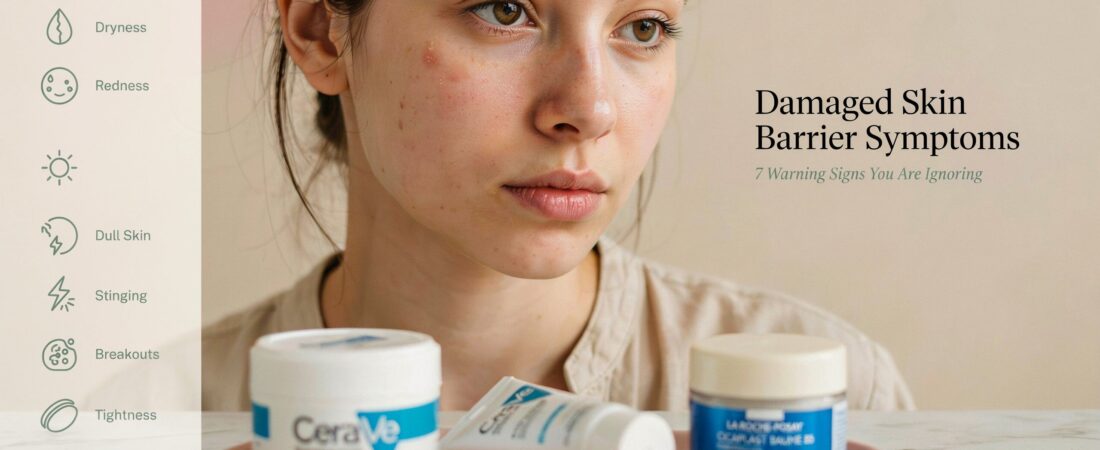
Related: Damaged Skin Barrier Symptoms – 7 Warning Signs You Are Ignoring – if your skin is already reacting badly to exfoliation, check this first.
7 Exfoliating Mistakes That Are Ruining Your Skin {#exfoliating-mistakes}
Exfoliating Mistake 1 — You Are Exfoliating Every Single Day
This is the number one reason people end up with angry, reactive, barrier-damaged skin – and it is the opposite of gentle exfoliation.
Daily exfoliation does not give your skin time to recover between sessions. The outer skin layers need 48–72 hours to stabilise after exfoliation. When you exfoliate every day, you are constantly disrupting that recovery window.
The result? Redness, tightness, sensitivity, and breakouts – all of which you might mistake for signs that you need to exfoliate more. You do not.
The fix: Limit exfoliation to 2–3 times per week maximum. For sensitive or dry skin, once a week may be enough. Gentle exfoliation on a schedule always outperforms daily aggressive exfoliation.
Exfoliating Mistake 2 – You Are Stacking Multiple Exfoliants at Once
Glycolic acid toner in the morning, salicylic acid serum at night, and an exfoliating cleanser in between. Sound familiar?
Every single one of those products is exfoliating your skin. Used together, even in the same day, you are layering exfoliation on top of exfoliation — and the damage accumulates faster than your skin can repair it.
The fix: One exfoliant per routine. Pick either an AHA (like glycolic acid) or a BHA (like salicylic acid) and use it on its own, 2–3 times per week. Rotate between them across different evenings if you want the benefits of both.
Related: Skincare Ingredients Not to Mix – 6 Deadly Combos That Wreck Your Skin – mixing exfoliants is one of the worst layering mistakes you can make.
Exfoliating Mistake 3 – You Are Using a Physical Scrub on Active Breakouts
Physical scrubs – walnut shells, sugar grains, apricot kernels – feel satisfying in the moment. But on acne-prone or already-irritated skin, they are doing real harm.
The jagged edges of most physical scrubbing agents create micro-tears in the skin. On a breakout, this spreads bacteria across a wider surface area and drives inflammation deeper into the skin. The exact opposite of what you want.
The fix: Switch to gentle exfoliation with a chemical exfoliant – specifically a BHA like salicylic acid, which is oil-soluble and penetrates into the pore to clear the blockage from the inside. No micro-tears, no spreading bacteria, no irritation.
Paula’s Choice 2% BHA Liquid Exfoliant is the gold standard recommendation for this – a globally trusted, dermatologist-backed chemical exfoliant that delivers genuine gentle exfoliation for acne-prone and oily skin. You can read more about how BHAs work on Paula’s Choice’s skincare ingredient glossary.
Exfoliating Mistake 4 – You Are Exfoliating Right After Cleansing With a Stripping Cleanser
A harsh foaming cleanser already removes a layer of your skin’s natural oils before your exfoliant even touches it. Follow that with an acid or scrub, and you have double-stripped your barrier in one routine step.
This is an especially common combination that dermatologists flag as a primary cause of over-exfoliation damage — and it is completely fixable.
The fix: Pair your exfoliant with a gentle, non-stripping cleanser. CeraVe Hydrating Cleanser and Cetaphil Gentle Skin Cleanser are both pH-balanced, fragrance-free, and designed to clean without compromising the barrier – so your exfoliant starts from a stable foundation, not a depleted one.
Exfoliating Mistake 5 – You Are Skipping Moisturiser After Exfoliating
Exfoliation removes dead cells and temporarily disrupts the skin surface. Skipping moisturiser afterwards leaves that exposed skin completely unprotected – no barrier repair, no hydration lock, no recovery support.
This is one of the most overlooked exfoliating mistakes because people assume exfoliating and moisturising are separate, unconnected steps. They are not.
The fix: Always follow gentle exfoliation with a hydrating serum and a barrier-repairing moisturiser. The routine is: exfoliate, wait 20 minutes, apply The Ordinary Hyaluronic Acid 2% + B5, then seal with CeraVe Moisturising Cream. This combination restores exactly what exfoliation temporarily disrupts.
Exfoliating Mistake 6 – You Are Exfoliating and Then Skipping SPF
Exfoliation – especially AHA exfoliants like glycolic and lactic acid – significantly increases your skin’s photosensitivity. Fresh, exfoliated skin burns faster and sustains UV damage more easily than non-exfoliated skin.
Exfoliating without applying SPF the next morning is actively causing pigmentation, redness, and long-term skin damage – even on cloudy days.
The fix: Exfoliation is a night-only activity for most people, and SPF every single morning without exception is non-negotiable. No sunscreen after exfoliating is not a gentle exfoliation practice – it is actively working against your skin goals. According to the American Academy of Dermatology, sun protection after exfoliation is a critical step most people skip.
Exfoliating Mistake 7 – You Are Using High-Strength Exfoliants as a Beginner
The Ordinary Glycolic Acid 7% Toning Solution is affordable and effective, but a 7% glycolic acid solution is a relatively strong entry point for someone whose skin has never used an AHA before.
Starting too strong, too fast, causes the same damage as over-exfoliating too often. Your skin needs time to build tolerance to active ingredients.
The fix: If you are new to chemical exfoliants, start with a lower-strength or buffered option used once a week. Increase frequency and strength only after your skin has tolerated it consistently for 4–6 weeks. Gentle exfoliation means meeting your skin where it currently is – not where you want it to be.
How to Tell If You Are Over-Exfoliating {#signs-of-over-exfoliation}
The Clearest Signs Your Skin Needs You to Stop Exfoliating
Before learning the gentle exfoliation technique, you need to know if you have already crossed the line. These are the most reliable warning signs:
- Skin feels tight and papery after cleansing
- A shiny, almost waxy appearance (not the healthy glow – a stressed sheen)
- Redness that does not calm down between skincare steps
- Products that previously felt fine now sting or burn
- More breakouts than usual, especially in new areas
- Flaking that does not improve with moisturiser
- Your skin feels worse after your routine, not better
If you recognise three or more of these, stop all exfoliation immediately. Return to the basics – gentle cleanser, CeraVe Moisturising Cream, and SPF – for at least two weeks before reintroducing any exfoliant.
Related: Damaged Skin Barrier Symptoms – 7 Warning Signs You Are Ignoring – full guide on identifying and repairing barrier damage caused by over-exfoliation.
The Right Way to Do Gentle Exfoliation {#how-to-exfoliate-gently}
How Gentle Exfoliation Actually Works (The Correct Approach)
Gentle exfoliation is not about using weaker products and accepting worse results. It is about using the right product, at the right frequency, on prepared skin, and following with the right recovery steps.
Here is what that looks like in practice:
Choose the right exfoliant for your skin type:
- Oily or acne-prone skin → BHA (salicylic acid) – oil-soluble, penetrates pores
- Dry or dull skin → AHA (glycolic or lactic acid) – works on the surface to smooth and brighten
- Sensitive skin → lactic acid at low concentration (5% or less) – the gentlest AHA option
- Combination skin → rotate BHA and AHA on alternate nights
Frequency for gentle exfoliation:
- Beginners: once per week for the first month
- Normal skin: 2 times per week
- Sensitive or dry skin: once per week, always
- Oily skin: up to 3 times per week maximum
The order matters:
Cleanse → wait 5 minutes → apply exfoliant → wait 20 minutes → hydrating serum → moisturiser → (morning only) SPF
Best Products for Gentle Exfoliation {#best-products}
The Only Exfoliation Products You Need for Healthy Skin
Every product below is beginner-safe, affordable, and specifically recommended for gentle exfoliation that delivers results without the damage:
| Product | Type | Best For | Frequency |
|---|---|---|---|
| Paula’s Choice 2% BHA Liquid Exfoliant | Chemical BHA | Oily, acne-prone, large pores | 2–3x per week |
| The Ordinary Glycolic Acid 7% Toning Solution | Chemical AHA | Dull, uneven texture | 1–2x per week |
| The Ordinary Hyaluronic Acid 2% + B5 | Post-exfoliation hydration | All skin types | After every exfoliation session |
| CeraVe Moisturising Cream | Barrier repair moisturiser | All skin types | After every exfoliation session |
| CeraVe Hydrating Cleanser | Pre-exfoliation cleanse | All skin types | Before every exfoliation session |
| Medicube Zero Pore Toner Pads | Gentle AHA/BHA combo pads | Beginners, combination skin | 2x per week |
Why Paula’s Choice 2% BHA specifically?
It is one of the most studied and recommended chemical exfoliants globally. At 2% salicylic acid in a leave-on formula, it delivers effective, gentle exfoliation deep inside the pore without the surface irritation that stronger or rinse-off formulas cause. It is the rare product that genuinely does what it claims — and it is beginner-safe at the correct frequency.
Gentle Exfoliation Routine – Step by Step {#routine}
The Complete Gentle Exfoliation Routine for Every Skin Type
☀️ Morning (day after exfoliating):
- CeraVe Hydrating Cleanser – do not exfoliate in the morning
- The Ordinary Niacinamide 10% + Zinc 1% – calms any residual redness
- CeraVe Moisturising Cream
- SPF 30+ – non-negotiable after any exfoliation the night before
🌙 Evening (exfoliation nights, 2–3x per week):
- CeraVe Hydrating Cleanser
- Paula’s Choice 2% BHA or The Ordinary Glycolic Acid 7% – never both
- Wait 20 minutes
- The Ordinary Hyaluronic Acid 2% + B5 – on slightly damp skin
- CeraVe Moisturising Cream – seal everything in
🌙 Evening (non-exfoliation nights):
- CeraVe Hydrating Cleanser
- The Ordinary Niacinamide 10% + Zinc 1%
- The Ordinary Hyaluronic Acid 2% + B5
- CeraVe Moisturising Cream
This is what gentle exfoliation looks like as a full routine – not just an exfoliant in isolation, but a complete system where every step supports the one before it.
Related: The Correct Skincare Routine Order for Beginners – the full AM and PM routine guide so every product lands in the right order.
FAQs About Gentle Exfoliation and Exfoliating Mistakes {#faqs}
Q: How do I know if I am doing gentle exfoliation correctly or still over-exfoliating?
After a properly done gentle exfoliation session, your skin should feel smooth and slightly more radiant by the next morning – not tight, not red, not sensitive. If you are waking up to irritated or reactive skin after exfoliating, reduce your frequency first, then reconsider your product strength.
Q: Can I do gentle exfoliation if I am already using retinol?
Yes – but not on the same night. Retinol and exfoliants should always be on separate evenings. Retinol nights get no exfoliation. Exfoliation nights get no retinol. This is non-negotiable for safe, gentle exfoliation when actives are involved.
Q: Are the Medicube Zero Pore Toner Pads a good option for beginners?
Yes – pre-soaked exfoliating pads at a controlled concentration are an excellent starting point for gentle exfoliation beginners. They limit the amount of product applied and make it easier to control frequency. They are a softer entry point than a dedicated AHA or BHA liquid.
Q: How long before I see results from gentle exfoliation?
Most people notice a smoother texture within 2 weeks of consistent, gentle exfoliation twice per week. Brighter, more even skin typically becomes visible at the 4–6 week mark. Do not increase frequency, looking for faster results – patience is the actual strategy here.
Q: Can I use Paula’s Choice 2% BHA and The Ordinary Glycolic Acid in the same week?
Yes – on different nights. BHA on Monday and Thursday, AHA on Wednesday, for example. Using them on the same night is an exfoliating mistake. Rotating them across the week is a smart, gentle exfoliation strategy.
Q: Is physical exfoliation ever okay, or should I always do chemical gentle exfoliation?
Physical exfoliation can be okay for body skin (elbows, knees, feet) where the skin is thicker. For your face, chemical gentle exfoliation is almost always safer, more effective, and less likely to cause micro-tears or irritation – especially on any form of acne-prone or sensitive skin.
Q: My skin is already red and reactive from over-exfoliation. Should I use a gentle exfoliant to fix it?
No. Stop all exfoliation completely. Damaged skin does not need more exfoliation – it needs ceramides, hydration, and time. Rebuild your barrier first with CeraVe Moisturising Cream and The Ordinary Hyaluronic Acid 2% + B5 for 2 full weeks. Only then reintroduce gentle exfoliation once a week.
The Bottom Line on Gentle Exfoliation
Gentle exfoliation is not a compromise – it is the correct approach. The idea that more exfoliation equals better results is the single biggest myth in beginner skincare, and it is causing real, lasting damage to thousands of people’s skin every day.
Less. Slower. Gentler.
That is the entire strategy. And the skin results that come from consistent, properly-done gentle exfoliation – smooth texture, smaller-looking pores, brighter tone, fewer breakouts – are better than anything aggressive daily exfoliation ever delivers.
Your skin does not need to be punished. It needs to be supported.
Read next: Skincare Ingredients Not to Mix – 6 Deadly Combos That Wreck Your Skin | Damaged Skin Barrier Symptoms – 7 Warning Signs You Are Ignoring
What exfoliating mistake have you been making? Drop it in the comments – the most common answer we get is “I had no idea I was doing it every day.”
📌 Pin this to your skincare-mistakes board – your skin will thank you for it.

Leave a Reply